
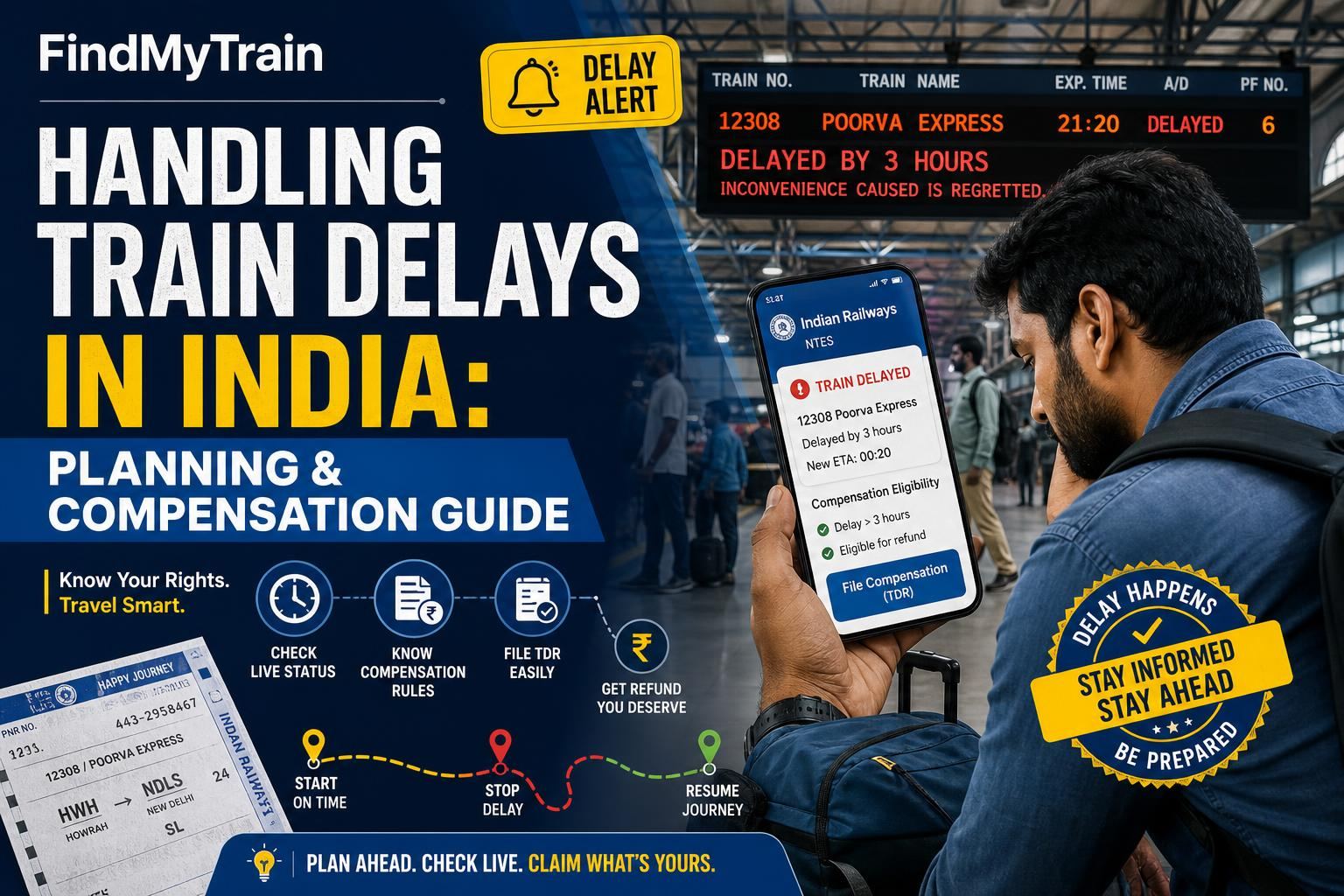
Experiencing a train delay can be frustrating, but knowing how to handle it effectively can turn a potential disaster into a manageable inconvenience. In India, where train travel is one of the most common modes of transportation, delays are not uncommon.
Whether it's a minor delay or a significant disruption, having a plan can save you time and stress. From understanding the eligibility for compensation to exploring alternative travel methods and planning your journey, this guide will prepare you for any scenario.
Understanding Train Delay Compensation
In India, train delay compensation policies are designed to mitigate the inconvenience caused to passengers. The compensation is generally applicable when a train is delayed by three hours or more. For premium trains like the Rajdhani, Shatabdi, and Duronto, passengers can claim a partial refund for delays.
The compensation process usually involves filing a claim through the official IRCTC website or at designated stations. It's important to keep your train ticket and any relevant documentation handy, as these will be required for processing your claim. Note that the rules and eligibility criteria for compensation may vary based on the train type and class of travel.
Passengers should also be aware of the timelines associated with making a claim. Typically, claims must be filed within a specific period following the delay, and processing times can vary. Always check the latest guidelines on refund rules for the most accurate information.
Alternatives to Consider During Delays
When faced with a train delay, exploring alternative travel options can be a practical solution. Depending on the length of the delay and your destination, you might consider taking a bus, booking a flight, or even hiring a taxi. This is especially useful for routes that have frequent delays or if you are on a tight schedule.
For shorter distances, ridesharing services or rental cars can provide flexibility and convenience. Evaluate the cost, time, and comfort of these alternatives before making a decision. Keep in mind that during peak travel seasons, these alternatives can also experience high demand, so it’s wise to plan ahead.
Some passengers may choose to wait for the next available train. In such cases, you need to check the live train status for updates on train schedules and platform changes.
Effective Planning for Train Journeys
Effective planning is important when traveling by train, especially when delays are a possibility. Start by booking your tickets well in advance through the official IRCTC website or app. This not only secures your travel plans but also allows you to choose from a wider range of trains and classes.
Always leave a buffer time before any important engagements at your destination. This can be particularly helpful in case of unforeseen delays. Keep an eye on weather forecasts and news updates that might indicate potential disruptions.
For those traveling frequently, investing in travel insurance that covers delays can provide peace of mind. While this may add to your travel costs, the benefits can outweigh the expenses should you face significant delays.
Common Mistakes to Avoid
One common mistake passengers make is not being aware of the compensation policies and procedures. Always familiarize yourself with the terms and conditions of your ticket purchase, especially regarding refunds and delays.
Another mistake is not having alternative travel plans. While it might seem unnecessary at the time of booking, having a backup plan can be invaluable during unexpected delays. This could involve knowing the bus schedules, having a list of local hotels, or being familiar with nearby airports.
Lastly, many passengers do not check their PNR status regularly. This can lead to missing important updates about train delays or cancellations. Regularly checking your PNR status ensures you are informed and can make timely decisions.
Practical Tips for Managing Train Delays
When dealing with train delays, staying calm and informed is key. Use mobile apps and websites to check real-time train information and platform updates. This can help you make quick decisions about your travel plans.
Carry essentials such as snacks, water, and a power bank to keep your devices charged. This can make waiting periods more comfortable and ensure you stay connected with loved ones or work commitments.
Engage with fellow passengers and railway staff to keep track of any announcements and changes. Sometimes, local knowledge and shared experiences can provide solutions or alternatives that are not immediately obvious.
Frequently Asked Questions
How can I claim compensation for a delayed train?
You can claim compensation for delayed trains through the official IRCTC website or designated stations. Keep your ticket and relevant documents ready.
What alternatives should I consider if my train is delayed?
Consider taking a bus, booking a flight, or using ridesharing services. Evaluate the cost, time, and comfort before making a decision.
How can I prepare for potential train delays?
Book tickets in advance, leave buffer time before engagements, and check weather forecasts and news updates to anticipate disruptions.
What are common mistakes to avoid during train delays?
Avoid not knowing compensation policies, not having alternative plans, and failing to check your PNR status regularly.
What should I do while waiting for a delayed train?
Stay calm, use apps for updates, carry essentials, and engage with fellow passengers for potential solutions.