
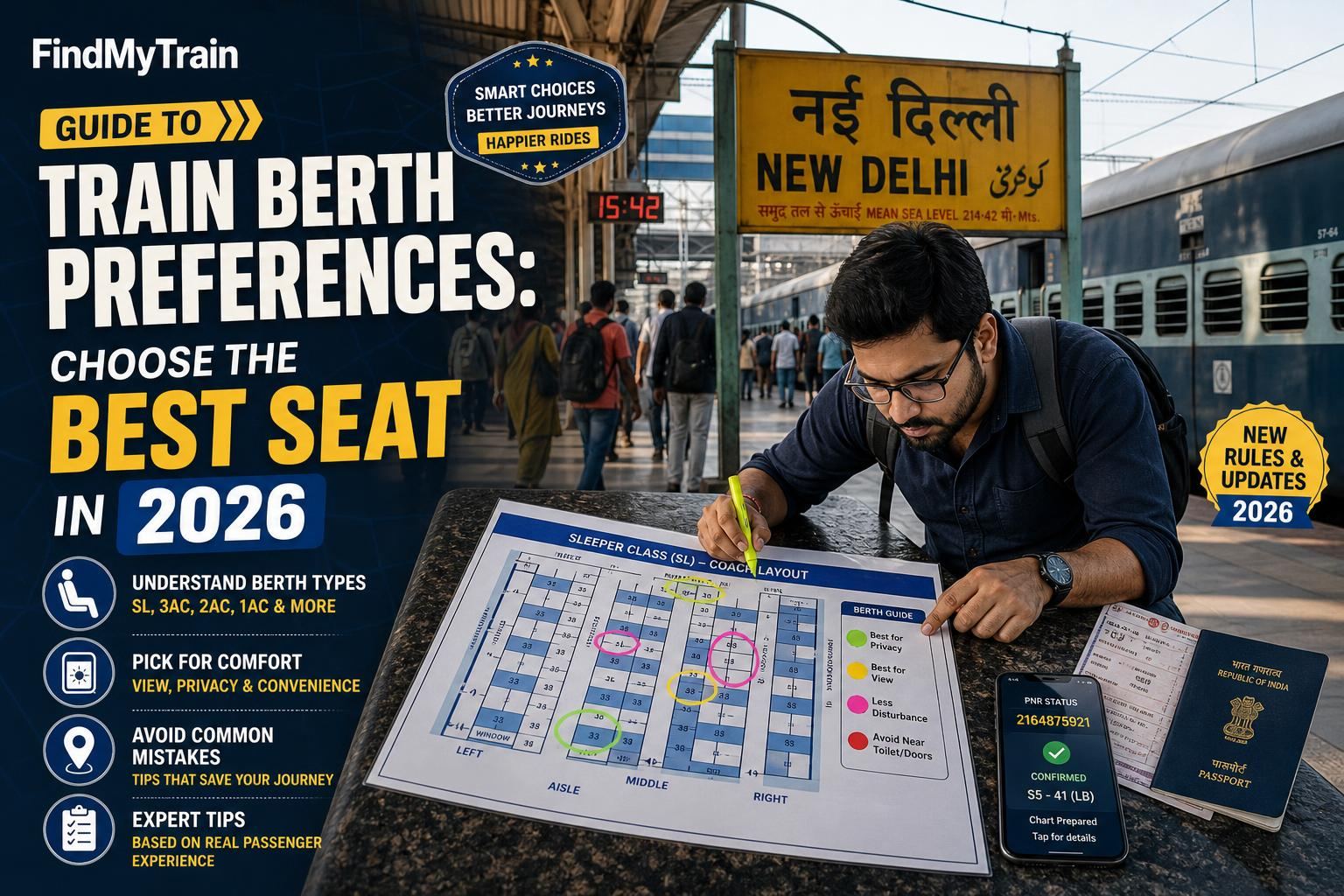
Introduction to Train Berth Preferences
When traveling by train in India, one of the most important decisions you'll make is choosing the right berth preference. With a wide variety of options available, selecting the best seat can significantly impact your comfort and convenience during the journey. Understanding berth preferences can help enhance your travel experience.
The Indian Railways offers a range of berth options, from upper and lower berths to side berths and more. Each option has its own advantages and drawbacks. We will cover the types of berths available, how to select them during booking, and practical considerations to keep in mind to ensure a pleasant journey.
Understanding Berth Types
The Indian Railways provides several berth types to accommodate different passenger needs. The most common are upper, middle, and lower berths, as well as side upper and side lower berths. Each type has distinct features, making them suitable for different travel preferences.
Upper Berth: Positioned at the top, upper berths offer privacy and are ideal for passengers who prefer less disturbance. However, climbing up and down can be inconvenient for some, especially elderly passengers.
Lower Berth: Located at the bottom, lower berths are easily accessible and often preferred by families traveling with children or elderly passengers. However, they may be subject to more foot traffic and disturbances.
How to Choose Your Berth Preference
When booking your train tickets through the official IRCTC website or app, you will have the option to select your berth preference. It's important to understand how to make these selections effectively to improve your travel comfort.
During the booking process, you'll be prompted to select your preferred berth type. While the system attempts to accommodate your choice, availability can impact the final allocation. It's advisable to book your tickets well in advance to increase the likelihood of securing your desired berth.
The selection of a specific class can also influence your berth preference. For instance, AC coaches may offer more comfortable berths compared to non-AC coaches, affecting your overall travel experience.
Timing and Costs Considerations
Timing is important when it comes to securing your preferred berth. Indian Railways operates on a first-come, first-served basis, meaning the earlier you book, the better your chances of getting the berth you want.
The cost of tickets can vary based on the class of travel and the distance of your journey. Generally, AC coaches are more expensive than sleeper coaches. However, the added comfort and convenience may justify the higher price for many travelers.
It's also essential to be aware of dynamic pricing, which can affect ticket costs based on demand. Booking during peak travel seasons or last-minute can result in higher prices, reducing the availability of preferred berths.
Common Mistakes to Avoid
Many passengers make mistakes that affect their berth allocation, often due to misunderstanding the booking process. One common mistake is assuming that selecting a preference guarantees that berth. Always check the final ticket allocation to confirm your berth.
Another mistake is not considering the needs of all travelers in your group. For example, if traveling with children or elderly family members, prioritize lower berths for their convenience and safety.
Lastly, avoid last-minute bookings if possible. The later you book, the fewer options you'll have, which can force you into less desirable berths or even different compartments.
Special Considerations for Different Passengers
Different passenger groups may have specific berth needs. Senior citizens, for example, often prefer lower berths due to easier access. Indian Railways earmarks a lower-berth quota for senior citizens and women aged 45 and above, and allots those berths automatically where available — a berth provision, not a fare discount.
Families traveling with young children should consider booking adjacent lower berths to keep the group together and ensure easy supervision of the children. This configuration allows for more flexibility in managing kids' needs during the journey.
For solo travelers, upper berths might be more appealing due to the added privacy, while business travelers may prefer side lower berths for easier access to amenities and less disturbance.
Step-by-Step Booking Guide
Booking your preferred berth can be straightforward if you follow a few essential steps. First, log onto the IRCTC website or app and enter your travel details, including the train number and class of travel.
Next, proceed to the berth selection section. Use the drop-down menu to select your preferred berth type. Remember that preferences are subject to availability, and booking earlier increases your chances of securing them.
After completing your selection, review the booking summary to ensure your preferences are correctly registered. Proceed to payment to finalize your booking. Always check your PNR status before departure to confirm your berth allocation.
Tips for a Comfortable Journey
To ensure a comfortable journey, plan ahead and consider all aspects of your train travel. Bring essential items such as a pillow, blanket, and eye mask, especially for overnight trips, to enhance your comfort regardless of your berth.
Keep track of live train status updates to avoid unexpected delays and adjust your plans accordingly. This can help you manage your time better and reduce unnecessary stress during travel.
Lastly, familiarize yourself with train amenities and rules, such as luggage restrictions and onboard services, to make the most of your journey. Being well-prepared can significantly enhance your travel experience with Indian Railways.
Frequently Asked Questions
What are the different types of berths available?
The common berth types include upper, middle, lower, side upper, and side lower berths, each offering different levels of convenience and accessibility.
Can I guarantee my preferred berth during booking?
While you can select a preference, allocation depends on availability. Booking earlier increases your chances, but final allocation is confirmed via PNR status.
Are there special berth allocations for senior citizens?
Yes. Lower berths are earmarked for senior citizens and women aged 45 and above, and are allotted automatically where available. This is a berth provision, not a fare concession — the senior citizen fare discount was withdrawn in March 2020.
How can I check my berth allocation after booking?
You can check your PNR status on the IRCTC website or app to confirm your berth allocation closer to your travel date.
What should I do if I don't get my preferred berth?
If your preferred berth is unavailable, consider other options or try booking through Tatkal or other quotas where different berths might be available.