
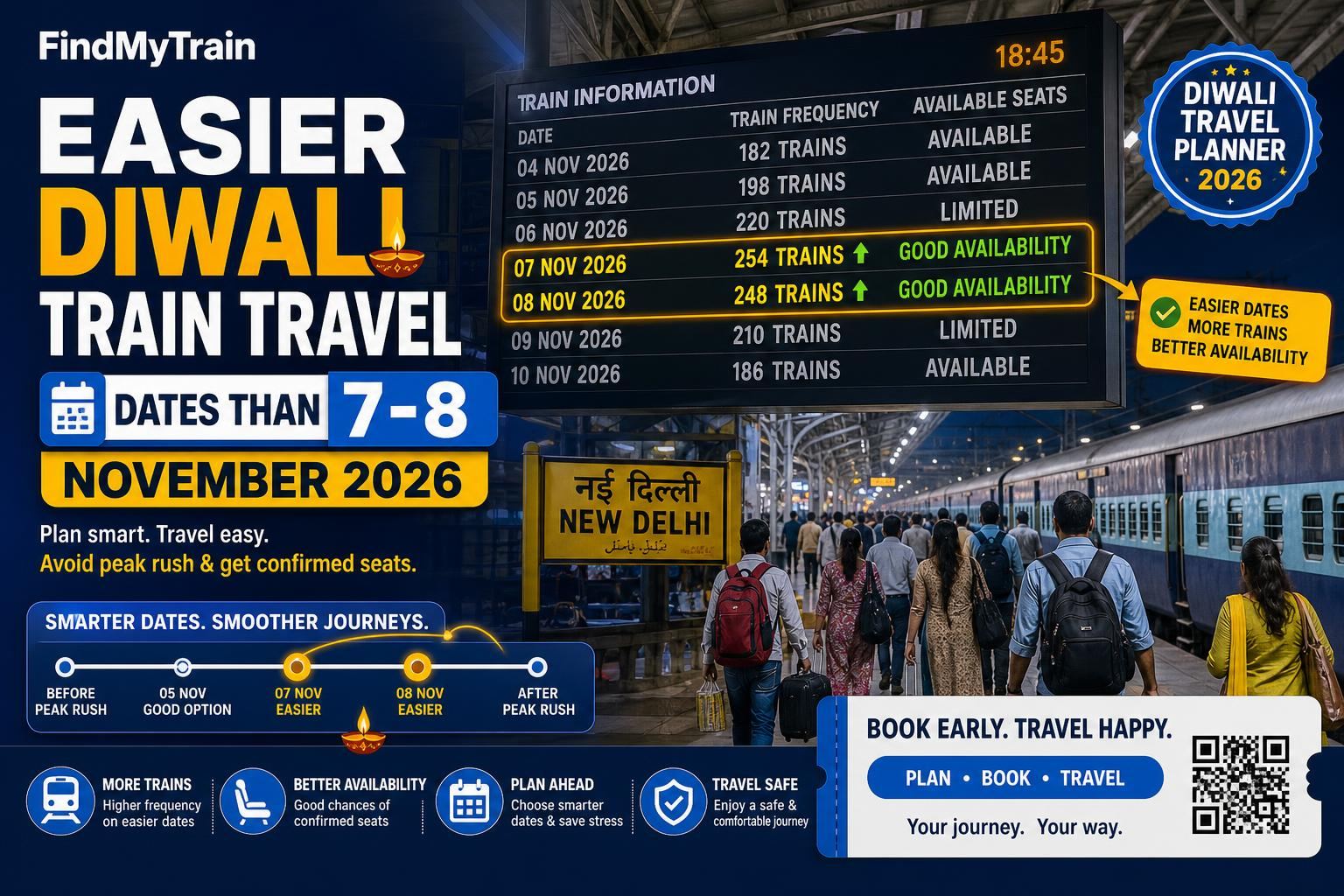
As Diwali approaches, securing a confirmed train ticket becomes more challenging, especially on peak dates like 7 and 8 November 2026. Travelers often find themselves struggling to book tickets on these dates, as demand reaches its pinnacle. However, alternative travel dates around Diwali can offer a higher probability of getting a confirmed ticket, easing travel plans during this festive season.
We will cover various strategies, including choosing alternative dates, understanding demand patterns, and practical tips to enhance your chances of a successful booking.
Understanding Diwali Travel Demand
Diwali is one of the most celebrated festivals in India, resulting in a massive surge in travel demand. Many people travel to their hometowns to celebrate with family, leading to crowded trains and high demand for tickets. This demand peaks around two to three days before Diwali, making it challenging to secure confirmed seats.
Understanding this demand pattern is important for planning your travel. The days immediately before Diwali, like 7 and 8 November, are typically the most sought after. By considering travel on dates just before or after these peak days, you can increase your chances of securing a ticket. Being flexible with your travel plans can significantly ease the booking process.
Demand is not uniform across all routes. Some routes experience higher demand due to a larger population traveling in those directions. Knowing which routes are less crowded can also aid in planning your journey effectively. Researching historical booking trends can provide valuable insights into which routes and dates might offer easier bookings.
Alternative Dates for Easier Booking
Traveling on alternative dates can be a strategic move to avoid the rush. Typically, dates before the peak days, such as 5 and 6 November, and after, like 9 and 10 November, may offer better chances of confirmed bookings. These dates generally see less competition as they fall outside the immediate pre-Diwali peak.
An effective strategy is to book on weekdays instead of weekends around Diwali. While weekends are naturally busier, weekdays can provide more availability. Consider traveling during off-peak hours, such as late-night or early-morning trains, which often have more availability than peak-time trains.
While these strategies can increase your chances of getting a confirmed ticket, you need to book well in advance. The earlier you book, the better your chances, especially on less crowded dates. This proactive approach can save you from last-minute hassles and ensure a smoother travel experience.
Using Tatkal Quota Effectively
For those who need to travel on peak dates and have missed booking regular tickets, the Tatkal quota offers a last-minute booking option. Tatkal tickets are released one day before the train's departure and can be a lifesaver for urgent travel needs. Understanding how to effectively use Tatkal booking can significantly enhance your chances of securing a seat.
It is important to be ready precisely when the Tatkal booking opens, which is usually at 10 AM for AC classes and 11 AM for non-AC classes. Ensure you have a fast internet connection and your payment method ready to expedite the booking process. Quick action is key, as Tatkal tickets sell out rapidly.
Familiarize yourself with the Tatkal booking process and rules beforehand. Knowing these details can help you avoid common mistakes that might delay your booking. Also, consider using the IRCTC app or website for faster access to Tatkal bookings.
Strategies for Group Travel
Traveling in groups around Diwali can be particularly challenging due to the high demand for multiple seats. However, there are strategies to improve your chances of securing group bookings. One effective method is to split the group into smaller bookings, increasing the likelihood of at least some members getting confirmed tickets.
Another approach is to use the IRCTC's Group Booking facility, which allows for bulk bookings under certain conditions. This facility is especially useful for large families or groups traveling together. Make sure to check the rules and eligibility criteria for group bookings on the IRCTC website.
Lastly, consider booking tickets for less crowded trains or routes. While this might mean a longer or less convenient journey, it can ensure that the group stays together. Planning and booking well in advance are important for group travel during Diwali.
Price Considerations and Budgeting
Traveling during Diwali can be expensive due to high demand and dynamic pricing. Ticket prices may rise as availability decreases, making it essential to budget effectively for your journey. Monitoring price changes and booking early can help you secure better rates.
The Tatkal booking often comes with higher charges, so it's wise to include this in your budget if you plan to use this option. Keep an eye on any festive offers or discounts that the Indian Railways might announce, which could help reduce travel costs.
Consider alternative travel options, such as sleeper class or non-AC coaches, which might offer lower prices. Being flexible with your travel class can significantly affect your overall travel budget during this peak season.
Common Mistakes to Avoid
One common mistake travelers make is waiting too long to book their tickets. Due to the high demand around Diwali, trains fill up quickly, leaving limited options for late bookings. Always aim to book as soon as the booking window opens to avoid disappointment.
Another mistake is not checking the status of trains before making plans. Changes in train schedules or cancellations can occur, especially around festive periods. Regularly check the train status to ensure your travel plans remain intact.
Lastly, not considering alternative routes or dates can limit your options. Being flexible and open to different travel dates can increase your chances of securing a confirmed booking. Avoid sticking rigidly to specific dates or times if possible.
Using Technology for Better Planning
In today's digital age, various tools and apps can assist in planning your train travel more efficiently. Using the official IRCTC website and mobile app can speed up your booking process and provide real-time updates on availability and schedules.
Third-party apps and websites, such as FindMyTrain, offer features like live train status updates and alerts for seat availability. These tools can help you make informed decisions and adjust your plans as necessary.
Set notifications for ticket availability and price alerts to stay updated on any changes. This proactive approach can ensure you don't miss out on booking opportunities during the busy Diwali period.
Practical Tips for a Smoother Journey
For a smoother travel experience during Diwali, pack light and plan for potential delays due to the increased travel volume. Arrive at the station well ahead of your departure time to avoid any last-minute rush.
Consider pre-booking accommodations and transport at your destination, as these services can also be highly sought after during Diwali. Having a full plan in place can prevent unnecessary stress during your journey.
Keep track of your train's status using reliable sources and be prepared for itinerary changes. Flexibility is key to handling the busy travel season successfully.
Frequently Asked Questions
What are the peak travel dates around Diwali 2026?
The peak travel dates around Diwali 2026 are typically the few days leading up to Diwali, particularly 7 and 8 November.
How can I increase my chances of getting a confirmed ticket during Diwali?
Consider booking on alternative dates, using the Tatkal quota, and being flexible with travel class and timing.
What is the Tatkal quota?
The Tatkal quota allows for last-minute bookings one day before departure, with tickets released at specific times for AC and non-AC classes.
Are there any discounts available for Diwali travel?
Occasionally, Indian Railways may offer festive discounts, though these are not guaranteed. Always check the IRCTC website for the latest updates.
How can technology help in planning Diwali travel?
Use the IRCTC website and apps, along with tools like live train status updates, to plan effectively and stay informed.